
Facade waterproofing: how to protect a building from rain and snow using industrial climbing techniques
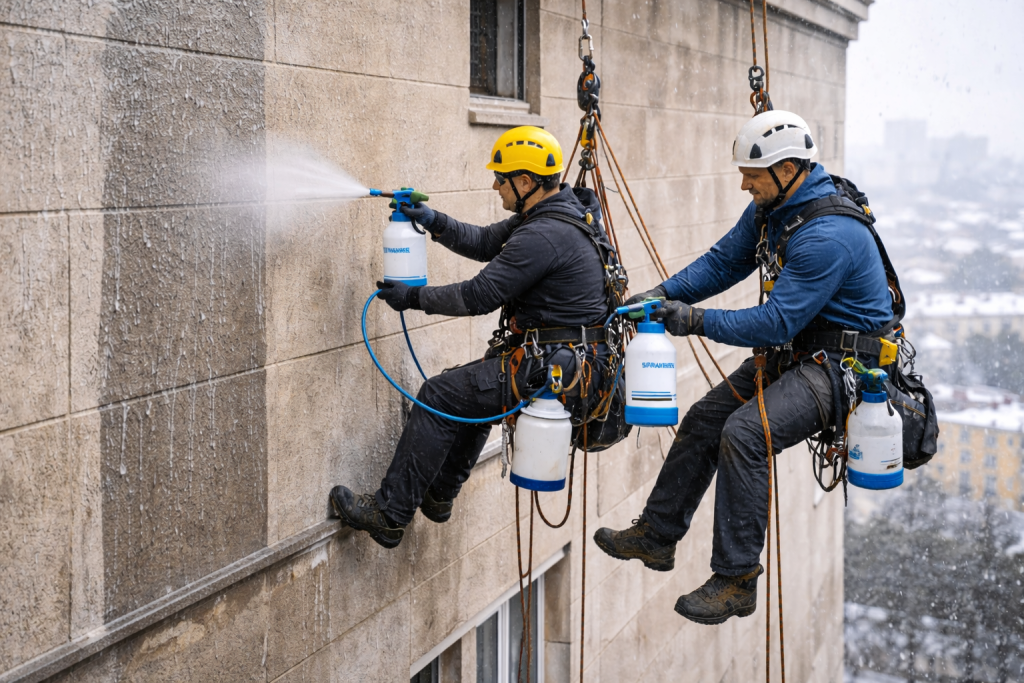
Precipitation and temperature fluctuations gradually destroy the exterior walls of buildings. Water penetrates the pores of the material, forming efflorescence and microcracks, causing plaster to peel off and metal elements to corrode. The problem worsens in winter: water freezing inside the walls expands the pores, and when the thaw comes, moisture penetrates deeper again. This causes stains, mold, and general aging of the coating. Hydrophobization prevents this process by creating an invisible barrier that does not change the appearance of the surface but prevents water absorption.
What is waterproofing in simple terms?
Hydrophobization is the application of a special compound that gives the surface water-repellent properties. This layer does not block the pores, so the wall “breathes,” releasing moisture from the inside but not allowing it to escape from the outside. The principle of operation is similar to the lotus effect: raindrops roll off without lingering or leaving stains. At the same time, the facade retains its natural color, and the service life of the coating increases several times. This is especially important for urban buildings, where dust, reagents, and precipitation are constantly present.
When and who needs waterproofing
Protective treatment is suitable for most materials: brick, concrete, natural stone, decorative plaster. It is necessary for both new and renovated facades after joint repairs or painting. It is best to carry out the work in dry weather, when the temperature is above +5°C, but without strict seasonal restrictions. It is only important that the surface is clean and not damp. If this is not done, moisture quickly penetrates the layers of the walls and gradually destroys their structure. The first signs that the facade needs protection are:
- salt deposits on bricks or stones;
- dark spots after rain;
- detachment or cracks in plaster;
- fragility of joints between slabs;
- the appearance of fungus or mold at the bottom of the walls;
- uneven darkening of the surface;
- freezing in corners or at joints.
Why it is profitable to hire industrial climbers
Work at height traditionally requires scaffolding, but this is not always possible in densely built-up areas. Industrial climbers make it possible to carry out waterproofing without installing structures, with minimal overlap in the yard. They work selectively — only on the necessary areas, ensuring uniform application of the product to all levels of the facade. This approach reduces work time and costs. For residential and administrative buildings, this means no noise, dust, or obstacles for residents or tenants. In addition, climbers can simultaneously inspect the condition of joints, identify leaks, mechanical damage, or delamination. This allows the customer to get an accurate picture of the condition of the facade before further repairs.
How to prepare for the work
Before applying the compound, it is important to clean the surface of dust, paint residues, or dirt. If there are defects, they are repaired locally — cracks are filled, joints are restored, and efflorescence is washed off. During the work, climbers use safety systems, secure equipment at verified points, and cordon off the area under the facade. This ensures the safety of pedestrians and property. To ensure that the process runs smoothly, it is useful for the customer to prepare a minimum set of data. Preparation checklist:
- Address of the property and number of floors.
- Facade type and surface material.
- Access to the roof or technical floor.
- Problem areas that need to be treated first.
- Photo or brief description of the current situation.
- The ability to temporarily fence off the area under the wall.
- Desired period of execution, taking into account weather conditions.
This information allows specialists to accurately assess the scope of work and select the optimal method of applying the composition.
Safe execution and quality control
Industrial climbers work according to permits and adhere to all safety rules. During hydrophobization, the facade is not simply covered with a compound — the density of the joints, the condition of the fastenings, and the drainage are checked. The work area is fenced off, and residents are warned about possible restrictions. The process is monitored step by step: from surface preparation to layer drying. After completion, the uniformity of the coating and the absence of stains are checked. This approach allows for stable results even in difficult urban conditions.
Facade waterproofing is a preventive measure that extends the life of a building and reduces the risk of freezing and defects. The work performed by industrial climbers does not require bulky equipment and allows any part of the facade to be treated with minimal inconvenience to residents. The exact scope of work is determined after inspection or photo analysis, and the schedule depends on the weather and access to the building.
Interesting Articles:
Lifting loads to heights for repair work: is it possible to do without heavy equipment?
When is the best time to call climbers to remove snow and icicles from roofs?