
What are the specifics of painting metal at height with the help of climbers?
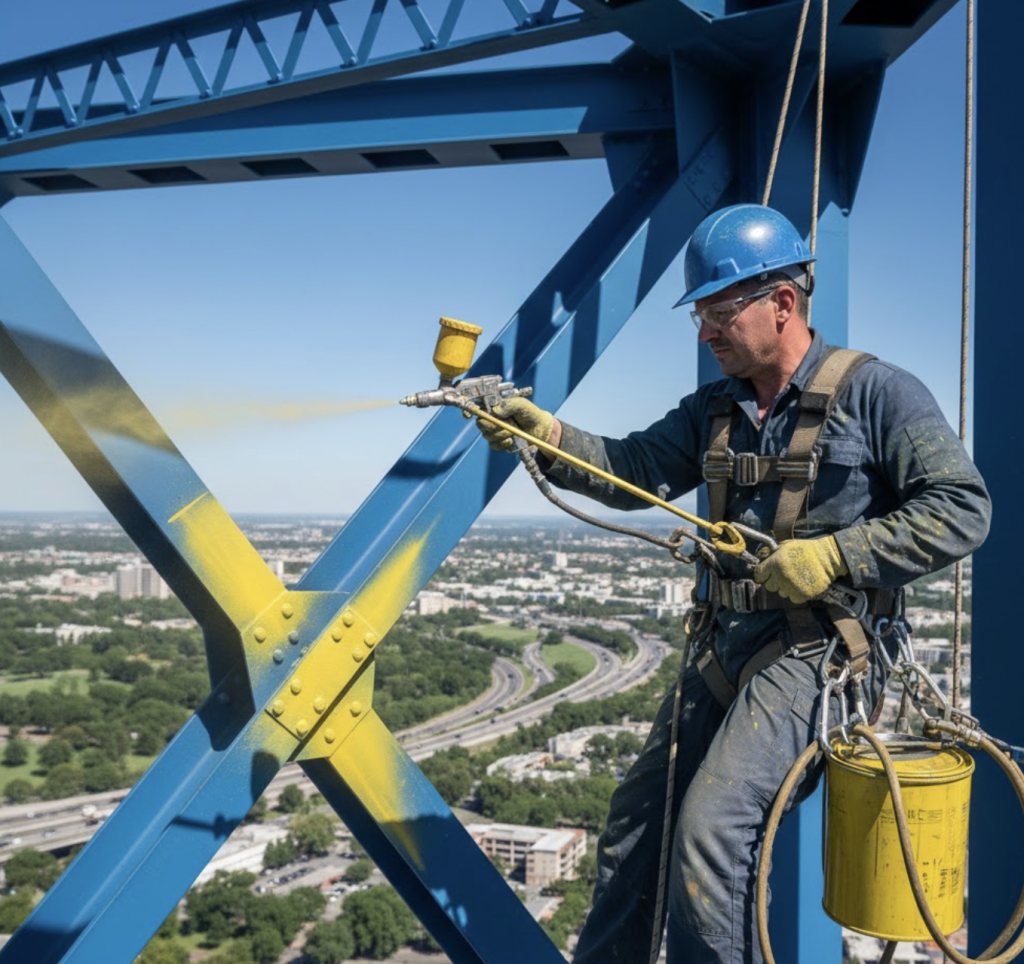
Metal structures are the backbone of modern architecture and industry. Bridges, radio towers, smokestacks, and skyscraper frames are exposed to harsh environmental conditions every day: ultraviolet rays, temperature fluctuations, and humidity. Without proper protection, even the strongest steel will rust in a matter of years. Painting metal at height by industrial climbers is not just a “cosmetic repair,” but a strategic task to extend the life of the object, where every movement of the brush or spray nozzle has its own specifics.
Specifics of high-altitude painting work: wind, adhesion, and preparation
The main difference between the work of a painter-climber and that of an ordinary worker is the limited resources and the influence of the elements. At heights above 50 meters, wind speeds are always higher than at ground level. This creates a problem with paint “spray”: when using airless painting equipment, the wind can carry away up to 30-50% of the material, which is not only financially disadvantageous but also dangerous for surrounding buildings and cars.
In addition, the condition of the surface is critically important. While a craftsman can easily sandblast metal on the ground, a climber is often forced to use hand or power tools while suspended in midair. The quality of preparation (removal of loose rust and degreasing) determines adhesion — the ability of paint to “stick” to metal. At height, a mistake in preparation will become apparent within a year, when the coating begins to peel off in layers under the influence of frost.
Tools and materials: what “heavenly” painters work with
The choice of tool depends on the type of structure and the requirements for the final coating. Industrial climbers use a combined approach, combining the speed of modern technology with the reliability of manual labor.
For high-quality painting at height, use:
- Airless sprayers (e.g., Graco or Wagner): allow you to create a dense coating without air bubbles, which is critical for corrosion protection.
- Rollers with extensions and special radiator brushes: indispensable when working in windy conditions or when painting lattice trusses, where spraying is ineffective.
- Abrasive tools: cordless brushes, cordless grinders (KSHM) so you don’t have to rely on long cables.
- Two-component polyurethane and epoxy enamels: they are highly resistant to aggressive environments and dry faster, which is important in changeable weather conditions.
- Special containers (spill-proof buckets): which are attached to the safety system with carabiners.
Technological chain: stages of corrosion protection
The process of painting metal structures at height is a clear sequence of actions. Violation of at least one stage voids the warranty for the work performed. A climber must be not only an athlete, but also a technologist who understands the chemical processes of paint drying.
Numbered list of work stages:
- Inspection and defect detection: Assessment of the degree of corrosion (from spot to through) and measurement of the thickness of the remaining metal.
- Surface cleaning: Removal of old, flaking paint and oxidation products to St2 or Sa2.5 (according to international standards).
- Degreasing: Removal of oil stains and soot with special solvents to ensure maximum adhesion.
- Priming: Application of the first coat (often zinc-filled), which creates a chemical barrier to moisture.
- Application of intermediate and final layers: Formation of a protective film of the required thickness (measured in microns using a “comb”).
- Quality control: Checking the integrity of the coating and the absence of “unpainted areas” in hard-to-reach places (connection nodes, bolts).
Why is industrial climbing more effective than special equipment?
Painting metal with the help of climbers has a number of economic and technical advantages. First, it is mobility. A team of climbers can set up their equipment in 30–40 minutes and start working, while installing scaffolding on a high tower can take weeks. Secondly, there are no height restrictions — aerial platforms rarely reach heights of more than 30–50 meters, while for a climber, the height is limited only by the length of their ropes.
In addition, the industrial climbing method allows work to be carried out without interrupting production processes at the enterprise. Climbers take up a minimum of space on the ground, do not block access roads, and do not clutter the area. This makes their services indispensable for painting energy facilities, bridge cranes in workshops, and elevators. The main thing is to entrust such work to specialists who have permits for climbing work and certificates for the right to perform painting operations, because the life of the metal “heart” of the structure depends on their skill.
Interesting articles:
How climbers perform welding work at height
Why clean drainage systems from ice and icicles